


Key Points:
- Knowing how parent training works in ABA therapy in New Jersey turns short therapy sessions into all-day learning moments.
- Parents learn the same teaching tools as therapists, including prompts, rewards, and clear behavior strategies.
- Coached parents help their children build skills faster, with fewer setbacks and stronger long-term gains across NJ homes.
Therapy sessions are powerful, but they only cover a few hours per week. Your child spends the other 100-plus hours with you. That gap is where parent training matters most. Many NJ families ask the same question: how parent training works in ABA therapy in New Jersey and what is actually taught.
This guide gives you a clear walkthrough. You will learn what coaches do, what you practice, how often you meet, and what progress looks like. We will also cover what good parent training in NJ looks like so you can pick the right program.
The honest answer to how parent training works in ABA therapy in New Jersey is that it is hands-on, not theoretical, and that is why it works. By the end, you will know how this part of therapy turns your home into a learning environment that lasts.
Why Parent Training Is the Engine Behind Real ABA Progress
Therapy hours are valuable, but they are small. A typical child gets 15 to 30 therapy hours weekly. That leaves a huge window where parents shape every meal, every transition, every meltdown. When parents use the same strategies the therapist uses, skills lock in faster.
This is why parent training in ABA therapy for NJ families is not optional. It is the part that makes the rest of the work stick. How parent training works in ABA therapy in New Jersey comes down to this: sessions teach the skill, and you make it permanent through daily practice across home routines.
What Is Parent Training in ABA Therapy in New Jersey?
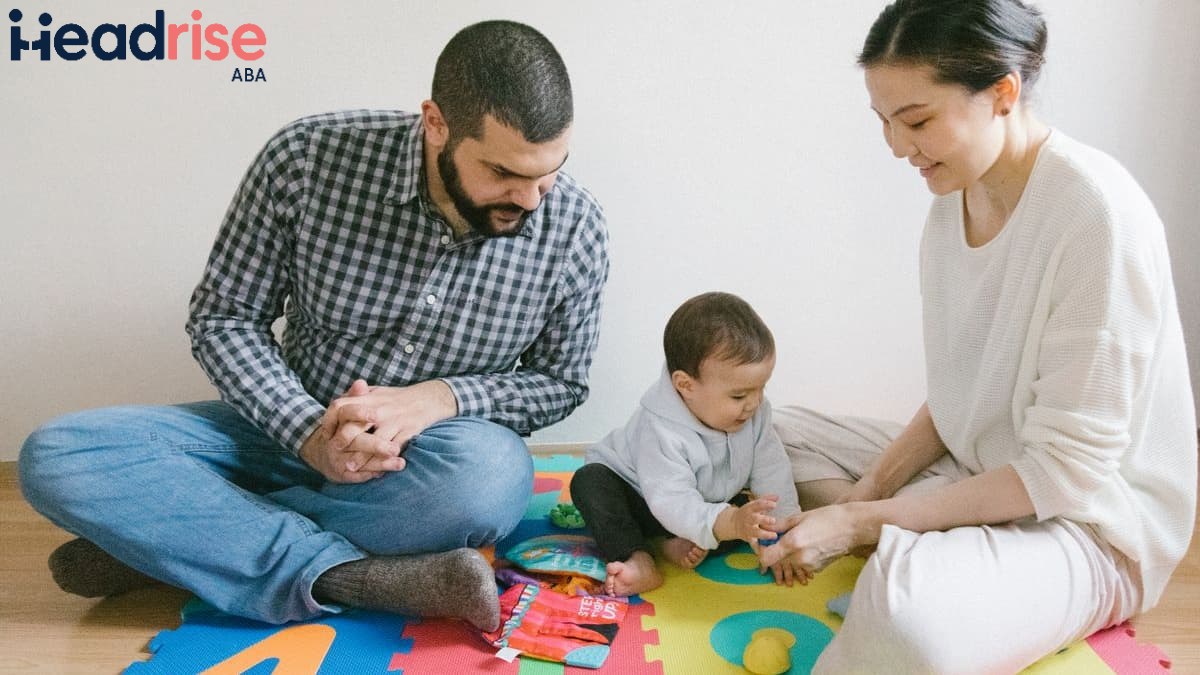
What is parent training in ABA therapy in New Jersey comes down to one idea: you become a co-teacher in your child’s plan. A BCBA, or Board Certified Behavior Analyst, coaches you on the strategies that match your child’s current goals. You practice. They give feedback. You adjust. How parent training works in ABA therapy in New Jersey is hands-on from day one.
This is not a lecture or a handout. It is real-time coaching during real-life moments. Bedtime, mealtime, sibling fights, sensory meltdowns. The BCBA shows you what to do in those moments, then watches you do it. Across Bergen County, Monmouth County, Hudson County, and Middlesex County, this is how most ABA programs run.
How NJ Parent ABA Coaching and How It Works Step by Step
Most NJ parent coaching programs follow a clear flow. Understanding NJ parent ABA coaching and how it works helps you set expectations from day one.
Step 1: Initial Goal Setting
Your BCBA reviews your child’s plan with you. Together, you pick two or three areas to work on at home. Common picks include morning routines, language use, and reducing tantrums. Goals stay small and specific.
Step 2: Skill Demonstration
The BCBA shows you the strategy in action. You watch them work with your child on the target skill. Most families say this part is eye-opening. You see exactly what to do, not just what to think about.
Step 3: Your Turn to Practice
You try the strategy while the BCBA watches. They give live feedback. Try again. Adjust. Most parents need three to five practice rounds before a strategy feels natural. That is normal.
Step 4: Between-Session Practice
Between coaching sessions, you use the strategy on your own. Keep notes. Track what worked. Bring questions to the next meeting. This is where the real learning happens. Many autism-friendly routines start here.
Step 5: Review and Adjust
Each coaching session starts with a quick review of what happened. The BCBA helps you problem-solve. Goals shift as your child grows. New skills get added. Old ones become automatic.
The full arc of how parent training works in ABA therapy in New Jersey loops back here, where you and the BCBA refine the plan together. Sibling support often becomes part of this stage as well.
What Parents Actually Learn in NJ ABA Coaching

Parent training for autism therapy in New Jersey covers a wide skill set. The exact topics depend on your child’s plan, but most parents learn these core strategies:
- How to use reinforcement, the technical word for reward, in daily moments
- How to prompt, which means giving small hints to help your child succeed
- How to fade prompts so your child becomes more independent
- How to use clear, short instructions during transitions
- How to track behavior data, even on busy days
- How to respond calmly during tantrums and meltdowns
These skills sound technical at first. After a few weeks of practice, they feel natural. Most parents say the strategies become second nature within two to three months of coaching.
How Often Parent Training Happens
Frequency depends on your child’s plan and insurance approval. Most NJ programs include weekly or biweekly coaching sessions. Each session lasts 60 to 90 minutes.
Common scheduling patterns:
- Weekly sessions during the first few months for new families
- Biweekly sessions once strategies feel comfortable
- Monthly check-ins for families with stable routines
- On-demand sessions when new challenges come up
Parent training hours are usually billed separately from your child’s therapy hours. Most NJ insurance plans, including Medicaid, cover this without extra paperwork.
Parent Involvement in ABA Therapy in NJ Looks Different at Each Age
Parent involvement in ABA therapy in NJ shifts as your child grows. Younger kids need different coaching than older kids. The BCBA adjusts the focus based on your child’s stage.
Toddlers (1 to 3 Years)
Coaching focuses on early language, feeding, and sleep routines. You learn how to build words through play, how to set bedtime cues, and how to handle picky eating without battles.
Preschoolers (3 to 5 Years)
This stage emphasizes social skills, transitions, and preschool readiness. Coaching covers turn-taking, handling change, and listening to short directions. Many families also work on potty training during this stage.
School-Age (5 to 12 Years)
Coaching shifts toward homework, peer interaction, and emotional regulation. You learn how to support school routines, manage homework battles, and build friendship skills at home.
Teens (12 to 18 Years)
Older kids need different support. Coaching covers independence, hygiene, and life skills. Parents learn how to back off appropriately, how to teach safety, and how to support social independence. ABA for autistic teenagers often features more parent-focused planning.
Common Worries About Parent Training
Many parents feel nervous about coaching at first. The most common worries we hear in NJ include:
- ‘I don’t have time for another session each week’
- ‘I don’t want to be judged on my parenting’
- ‘What if I do it wrong?’
- ‘My child acts differently with me than with the therapist’
- ‘I am already exhausted’
These are real. A good BCBA respects them. Coaching should feel supportive, not judgmental. If your coach makes you feel small, find a new one. Quality coaches treat you as the expert on your own child.
ABA Parent Coaching Program in NJ: What Quality Looks Like
Not every ABA parent coaching program in NJ is built the same. When you compare providers, look for these signs of quality:
- BCBA leads the coaching, not an unsupervised RBT
- Sessions happen in your home or via video, your choice
- Goals are written down and reviewed regularly
- Coach gives real feedback, not just praise
- Materials and notes are shared with you after each session
- Coach respects your family routines and culture
Families in Clifton, Lakewood, and other NJ communities often ask these specific questions during intake. Good providers welcome them.
How Parent Training Speeds Up Your Child’s Progress

When parents use ABA strategies daily, children make gains faster. Studies show that kids whose parents are coached make 30 to 50 percent more progress than kids whose parents are not. The reasons are simple.
- Skills practiced across the day stick better than skills practiced once or twice
- Generalization happens faster, meaning skills transfer to new places
- Parents catch teaching moments therapists miss
- Family stress drops as routines become smoother
- Siblings benefit from calmer, more predictable homes
Parent training in ABA therapy for NJ families is the multiplier on every other hour of work. Without it, progress is slower and harder to maintain. Strong parent training for autism therapy in New Jersey keeps gains rolling between sessions and across years.
Frequently Asked Questions
1. Is parent training required in NJ ABA programs?
Most quality programs require it. Insurance plans often expect monthly parent training as part of the ABA plan. Skipping it can affect authorization renewals, so most NJ providers build it in from the start.
2. What if my partner and I disagree on the strategies?
This is common. Good coaches help families align. Sessions can include both parents, or each separately. The goal is consistency, not perfection. Your BCBA helps you find common ground over time.
3. Can grandparents or caregivers join sessions?
Yes, with your permission. Many NJ programs welcome extended family. The more adults using the same strategies, the faster your child progresses. Check with your BCBA about scheduling and consent.
4. How long do most families need parent training?
It varies. Some families continue for the full length of ABA therapy. Others reduce to monthly check-ins after the first year. Your BCBA helps decide based on your comfort and your child’s progress.
5. Will I need to do this forever?
No. Once strategies become automatic and your child meets key goals, formal coaching slows down. Most parents keep using the tools naturally even after sessions end. The skills stay with you for life.
Coach the Caregiver, Change the Whole Home
Therapy lasts a few hours a week. Parenting lasts the rest. When you become the coach inside your own home, every meal, every bedtime, and every sibling moment turns into a chance for growth. That is the real power of how parent training works in ABA therapy in New Jersey.
Headrise ABA walks NJ caregivers through coaching that fits real routines, real worries, and real schedules. Our BCBAs train you in the same skills they use, then back you up between sessions when challenges come up.
Reach out to us and learn how ABA parent coaching program in NJ sessions can give you the confidence, language, and tools to support your child every day, not just during therapy hours.