



Key points
- ABA stands for applied behavior analysis, a science that studies how behavior is learned and how surroundings shape it.
- Therapy uses small steps, rewards, and data to teach skills like talking, playing, and caring for yourself.
- A good program is led by a BCBA, respects your child’s comfort, and keeps you in the loop.
Your pediatrician says “ABA therapy,” and your mind fills with questions. Is it safe? Will it help? You are not alone. Many parents hear the term long before anyone explains it. That is completely normal. This guide answers the big question: what is ABA therapy, in plain words.
You will see the clear meaning, how sessions work, and which skills it can help with. You will also see honest limits, since no therapy fits every child. Every child learns differently, so every plan should look different. Nothing here replaces advice from your child’s doctor. Take what is useful and bring the rest to your care team.
If you want quick answers first, read common questions about ABA therapy. Then come back here for the details. Every section ends with one clear takeaway you can use right away. Take notes as you go, and share them with your own care team.
What Is ABA Therapy? A Plain Definition
ABA is a way of teaching skills by studying behavior. The team looks at what happens before a behavior and what happens after it. Then they change those pieces so helpful skills grow and hard moments shrink.
Who Provides ABA Therapy?
A BCBA designs and supervises the plan. Behavior technicians deliver sessions, and many hold an RBT credential. Parents are partners, and many providers include parent training. Explore the full list of ABA services to see where your family fits.
Is ABA Only for Autism?
ABA principles apply to many learners, but most families meet ABA through an autism diagnosis. Knowing what ABA therapy is and what it is not helps you judge any program.
What Does ABA Therapy Stand For?
What does ABA therapy stand for? It stands for applied behavior analysis. Each word has a simple meaning:
| Word | Plain meaning |
| Applied | Used in real life, like at home or in the community |
| Behavior | Anything a person does or says |
| Analysis | Looking closely at what happens before and after |
ABA Therapy Meaning in Everyday Life
The ABA therapy meaning shows up in small moments. A child asks for juice and gets it. A child tries a new word and hears a cheer. The team repeats what works and changes what does not.
ABA Therapy Definition in One Sentence
Here is a short ABA therapy definition you can remember: a method for teaching useful skills by understanding what happens around a behavior. Health experts say ABA encourages desired behaviors and discourages undesired ones to improve a variety of skills. Learn more about Headrise ABA and how the team works.
How Does ABA Therapy Work?
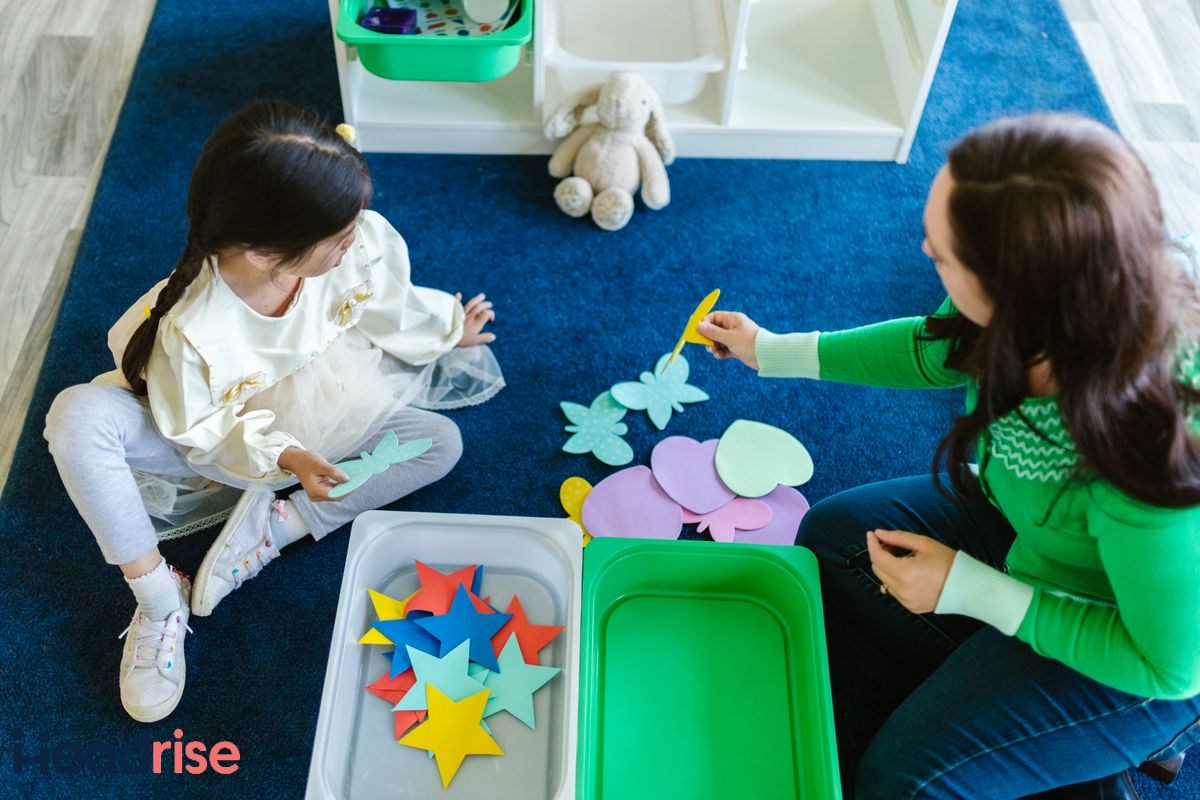
How does ABA therapy work from week to week? A Board Certified Behavior Analyst (BCBA) studies your child’s skills and needs. The BCBA builds a plan with clear goals. Trained behavior technicians then work with your child, often one-on-one, and track progress with data.
The team looks for patterns using the ABCs. The antecedent is what happens before. The behavior is what your child does. The consequence is what happens after. Changing those pieces teaches new skills.
At Headrise ABA, the path to services follows four steps:
- Hassle-free intake
- Insurance approval
- A plan of action
- Progress begins with ABA services
Many families start with an autism assessment, then move into in-home sessions where skills can grow in familiar routines. Understanding the process helps you ask better questions at every step.
A Sample Session
Parents often ask what ABA therapy does in one visit. A technician greets your child with play. They practice a goal, like asking for help, in short turns. Each success earns a reward your child likes. The technician notes what worked and shares notes with you at the end.
How Long Does ABA Therapy Take?
Hours differ. Some children attend a few hours a week, and others attend more. A BCBA recommends hours after the assessment, and insurance may review that plan. Ask how often goals are updated, and read about hours and insurance approval before you decide.
What Does ABA Therapy Do for a Child?
So, what does ABA therapy do in daily life? It teaches skills in small steps and rewards effort. It also looks for the reason behind hard behaviors and teaches safer ways to meet the same need. The goal is real-life skills, not perfect behavior. Progress is rarely a straight line. Some weeks bring big jumps, and others feel flat. Your BCBA should explain what the data shows, adjust goals, and celebrate small steps with you.
What Does ABA Therapy Help With?
- Communication, from first words to longer requests
- Daily living skills like dressing and toileting
- Play and social skills with family and peers
- Safety, like staying close in public places
- Routines and transitions, like leaving the park
- School readiness skills like waiting and following directions
Researchers describe several kinds of ABA, including pivotal response training and discrete trial teaching. ABA does not cure autism. It teaches skills. Ask what ABA therapy can help your child with, since goals should match your family’s priorities. Parents can also join ABA parent training to practice the same strategies.
What ABA Therapy Does Not Do
It does not change who your child is. It does not require a child to hide natural traits. The real ABA therapy meaning is about skills that help your child, like communicating needs and staying safe. Respectful teams focus there.
What to Expect From ABA Therapy at Home

Headrise ABA says its therapy is BCBA-led and highly supervised. Trained behavior technicians work under that supervision. Sessions can happen in your home, so skills grow where daily life happens. The team also offers center-based and school-based therapy across New Jersey and New York.
Families in New Jersey and New York can ask about openings. Headrise says it keeps no waiting list and handles insurance approvals. Ask for details about your own plan before you start. Ask where sessions will happen, how often the BCBA visits, and how the team answers questions between visits. Headrise lists an office in Toms River, New Jersey, and offices in Brooklyn, New York.
Questions to Ask Before You Start
- Who will work with my child?
- How will you track progress?
- How will you protect my child’s comfort?
- How can I take part?
Good answers are clear and kind. Keep asking until you feel heard. Bring a notebook to your very first visit, too. The more you know about what ABA therapy is, the easier those conversations get.
Frequently Asked Questions
What does ABA therapy stand for?
ABA stands for applied behavior analysis. It is the science of how behavior works, applied to real-life skills. The therapy uses that science to teach new skills and reduce behaviors that get in the way.
Is there an official ABA therapy definition?
Experts word it in slightly different ways, but the core idea is the same. It is a scientific approach that studies behavior and uses what it learns to teach useful skills and improve daily life.
How does ABA therapy work at home?
A BCBA sets goals after an assessment. A trained technician then teaches skills during daily routines, rewards progress, and records data. Parents learn the same strategies so skills carry over between sessions.
What does ABA therapy help with at different ages?
Young children may work on first words, play, and following directions. Older children may work on self-care, social skills, and handling change. Goals should grow with your child and reflect what matters to your family.
Does ABA therapy cure autism?
No. Autism is not something to cure, and ABA does not claim to do so. It teaches skills and supports daily life. Ask any provider what outcomes are realistic for your child, and how they will measure them.
Start With Clear Answers
Before you commit to anything, write down your three biggest questions. Ask them out loud. A good team will answer in plain words, and that is the best first step to understand what is ABA therapy for your child. Ask how they will measure progress and respect your child’s comfort.
Headrise ABA offers BCBA-led therapy in New Jersey and New York, with in-home options, parent training, and help with insurance approval. The team says it keeps communication constant and supervision close. Early intervention before age 3 in New York is part of its work too.
Ready to talk it through? Contact us and share your questions. A friendly intake conversation can be your next step, with no pressure at all.